
Interest in astrology has not faded, and neither has the habit of asking who we end up with and why. The seventh house sits at the heart of that question. It is the sector of a birth chart tied to marriage, close partnerships and even open rivals. What has changed over the centuries is mostly how people reach that information and how they read it.

Long before software, astrologers in the ancient Mediterranean worked from observation and careful arithmetic. They tracked the horizon, the rising degree and the position of the planets, then divided the sky into twelve sectors. The point opposite the rising degree, known as the Descendant, marked the start of the seventh house. Producing a single chart could take a trained practitioner a long and patient sitting.
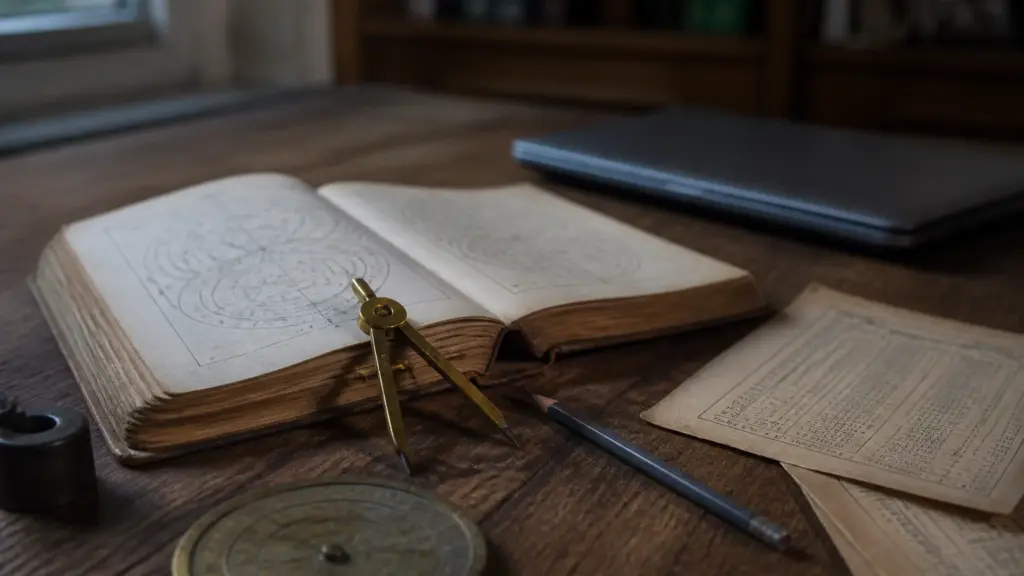
Medieval and Renaissance scholars refined those methods and passed them on through handwritten and later printed works. Tables of houses were compiled for particular latitudes, and chart makers looked up values by hand and adjusted them for the birth hour. Errors crept in easily, since a small slip in the time changed the cusp. Even so, the seventh house kept its reputation as the place to read about spouses and formal agreements.
Readers of a general news site may wonder why a chart calculation deserves attention at all. The answer is partly cultural, because horoscope columns have been a familiar newspaper feature for generations. Tools that turn a birth date into a chart belong to that same habit of curiosity about personal life. The technology simply moved from the printed page to the browser.
The twentieth century brought ephemerides in widely printed form, and astrology groups taught students to build charts with pencil, tables and a calculator. The arrival of personal computers then automated the arithmetic entirely. Programs could compute planetary positions and house cusps from a birth date, time and place within a moment. That freed practitioners to spend their effort on interpretation instead of on sums.
What Online Tools Do Today
Today a web tool such as a 7th House Calculator asks for the same three facts astrologers always needed: the date, the time and the place of birth. According to the tool’s own description, it returns the sign on the seventh house cusp, the exact degree of the Descendant and any planets located in that house. These are the same ingredients a scholar once derived by hand. YesAstrology is one of the services offering such a tool, alongside many other free calculators.
The meaning attached to the house has also been widened by modern readers. Traditional texts stressed marriage, contracts and open opposition, and those themes remain. Contemporary interpretation leans more toward the qualities a person seeks in a committed bond and how they behave inside it. The sign on the cusp and the planet that rules that sign are read together to describe those patterns.
Accuracy still depends on the input, and that point has not changed since the earliest tables. A birth time that is off by even a short margin can move the Descendant into a different sign. Many people only know an approximate hour, so a result is best treated as a starting point. Checking a birth certificate or family record remains the sensible way to firm up the data.
Different traditions also disagree about how houses should be divided, and software now lets users choose among several systems. This is a quiet reminder that the chart is a model and not a measurement of fate. Cusp degrees can shift by a small amount depending on the method used. Readers who compare results across tools should expect such differences and not treat them as faults.
Looking back, the journey runs from a horizon observed by eye to a form filled in on a phone. The arithmetic became effortless, yet the old questions about partnership, trust and compromise stayed exactly where they were. A calculator can name a sign and a degree, but what a person does with that information remains an individual matter. That quiet continuity may explain why the seventh house still draws attention.